By becoming a diversity advocate, you support team members in bringing their whole selves to work. Discover skills for contributing to an inclusive workplace where everyone can thrive.
What is a diversity advocate?
Organizations—and the people in them—thrive when everyone feels they belong and are respected for what makes them different and unique. Policies and practices can help, of course. But actions and behaviors by individuals throughout the organization matter too.
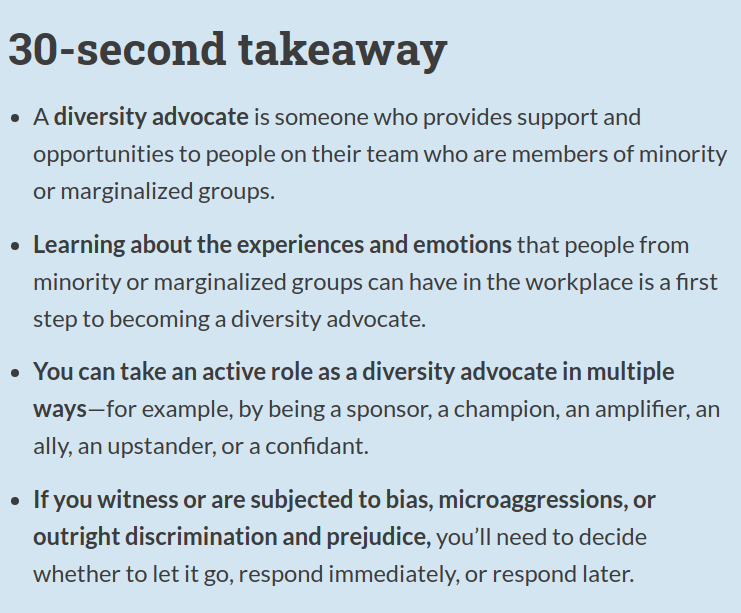
Whatever your role, you can be a diversity advocate—someone who provides support and opportunities to people who are members of minority or marginalized groups.
Be inclusive. Give space for others to use their voice in meetings or presentations. Ask for opinions. You can also participate in employee resource groups. And if you witness or hear a microaggression, please speak up.
Be a mentor. Share your experiences and talk about how you overcame obstacles along the way. You can also identify stretch assignments and provide support and guidance and perhaps recommendations on training and certifications that your mentee can pursue.
Be an advocate. Recognize strengths and achievements, share your network and make introductions to key people in your network to provide opportunities for visibility.
How can you become a diversity advocate?
- Learn about others’ experiences
- Take an active role
- Respond to biased behavior
1. Learn about others’ experiences
When you’re a diversity advocate, you use the power, connections, and other advantages that come with your dominant identities to support people from minority or marginalized groups.
To start, deepen your understanding of the difficult experiences and emotions that people with marginalized identities can have at work.Negative experiences can take a heavy emotional toll on people by fostering a heightened sense of difference as well as feelings of isolation and solitude. It’s also exhausting for people when they feel they have to excel at two jobs:
- The official job they were hired to do
- The job of “cultural ambassador,” charged with advocating for other people in their minority or marginalized group
These experiences can result in immediate and long-term mental and physical health challenges, including depression and anxiety. Such challenges diminish team members’ productivity and erode their engagement in the workplace.
To strengthen your understanding of what people in minority or marginalized groups experience in the workplace, try these approaches: *
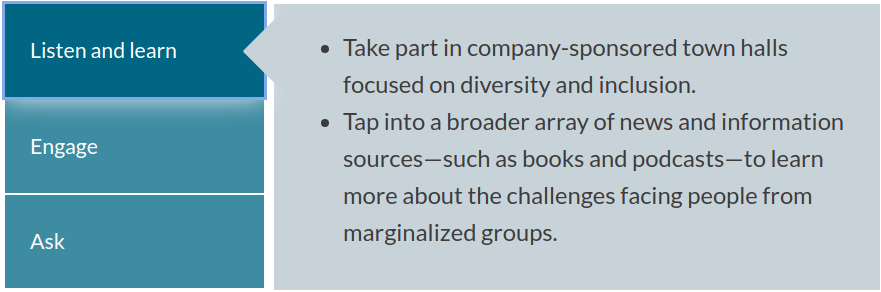
Seek to learn as much as possible about the challenges and prejudices your colleagues from underrepresented groups might face. Example: As part of his effort to learn more about the challenges women face in the workplace, David commits to spending time each week listening to podcasts focused on women’s experiences.
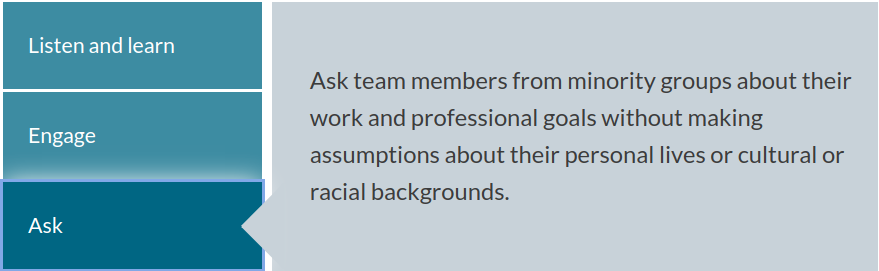
Ask your minority-group team members about their work, not their personal lives or cultural or racial backgrounds. Example: “What do you want to accomplish? What concerns do you have about achieving your goals? How can I help you?”
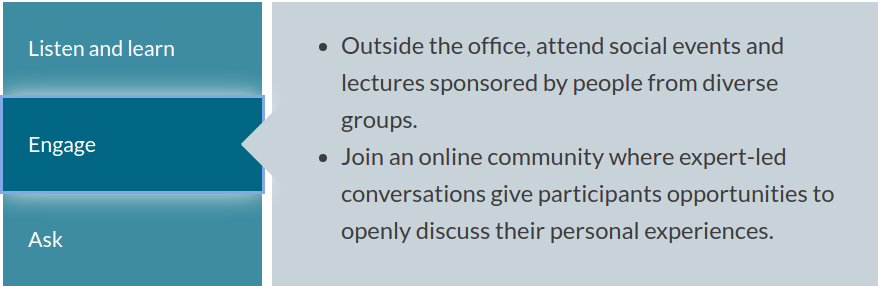
Make an effort to engage with people who are part of minority or marginalized groups. Focus on listening, not sharing your own opinions and experiences. Example: Jasmine’s organization has several active Employee Resource Groups (ERGs), including one for members of the LGBTQ community. She asks if she might sit in on their monthly meetings. These events prove to be good opportunities for Jasmine to meet members of the ERG and learn more about their experiences at work.
2. Take an active role
You can leverage the credibility, connections, and other advantages that come with your dominant identities to help build an inclusive workplace where everyone can thrive. There are several roles you can play as an advocate for team members from marginalized groups:
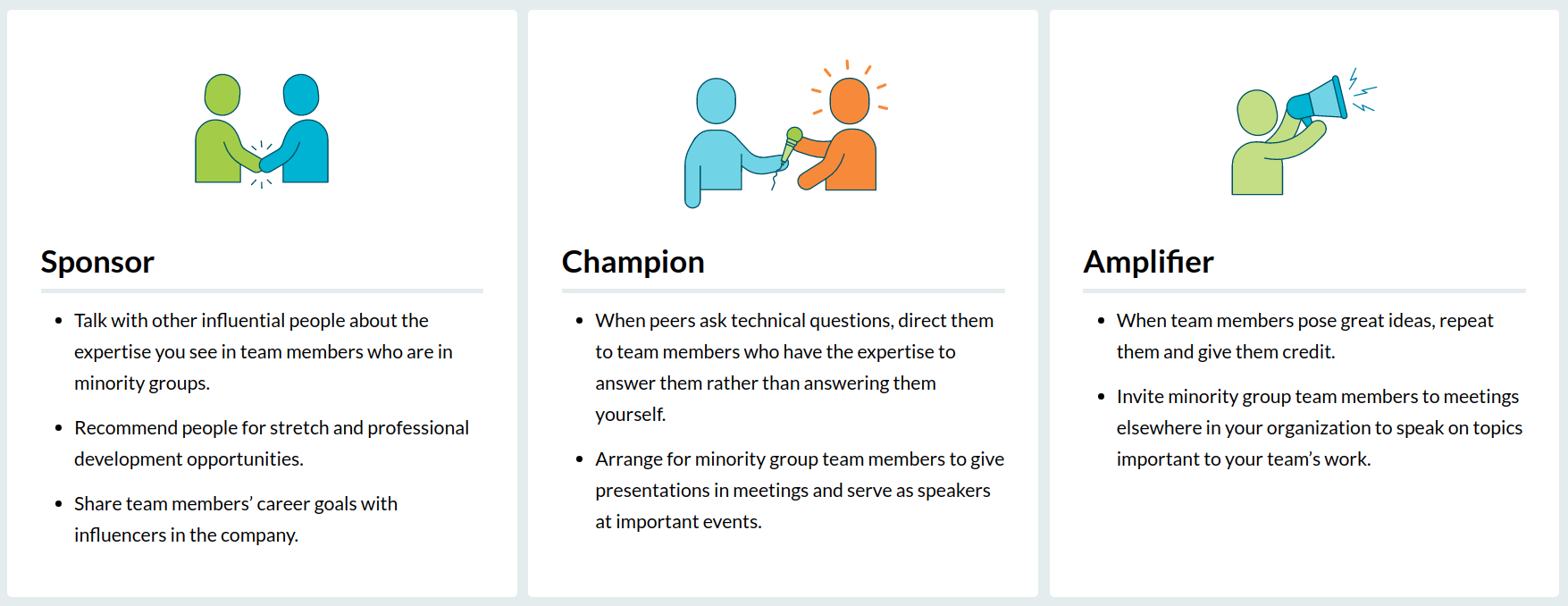
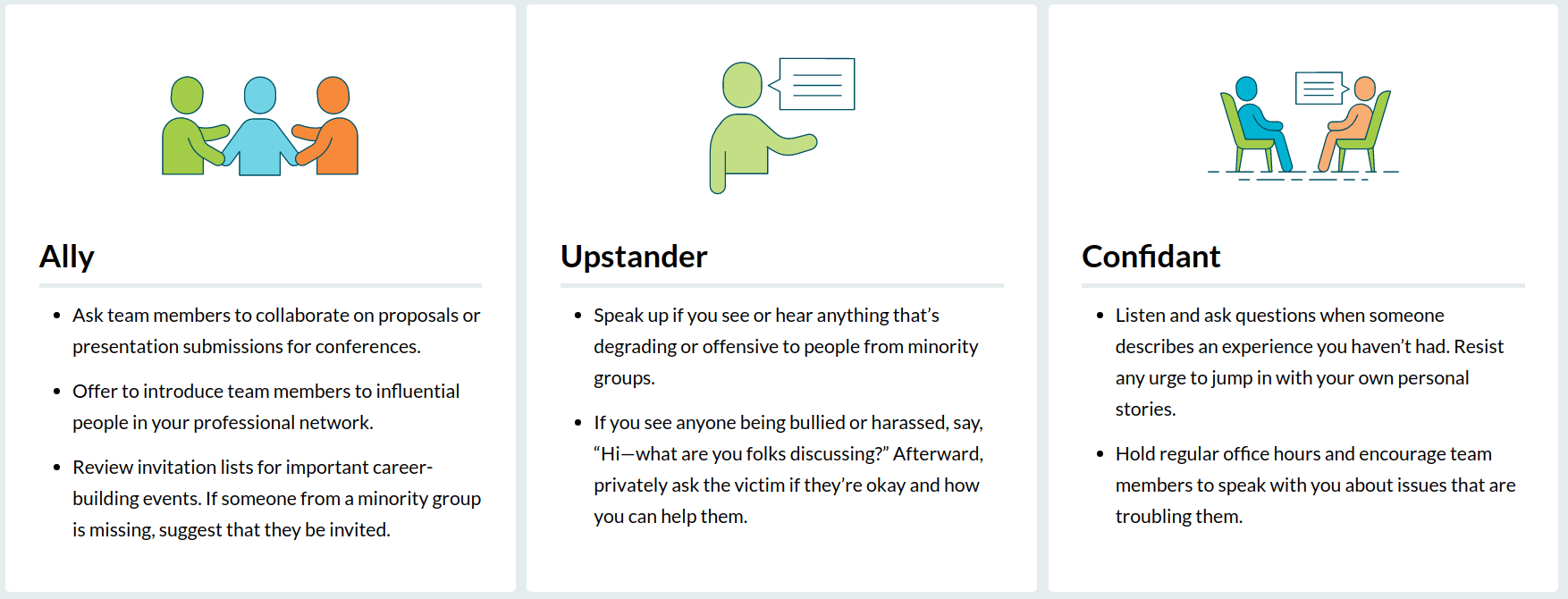
3. Respond to biased behavior
Tips for responding to microaggressions:
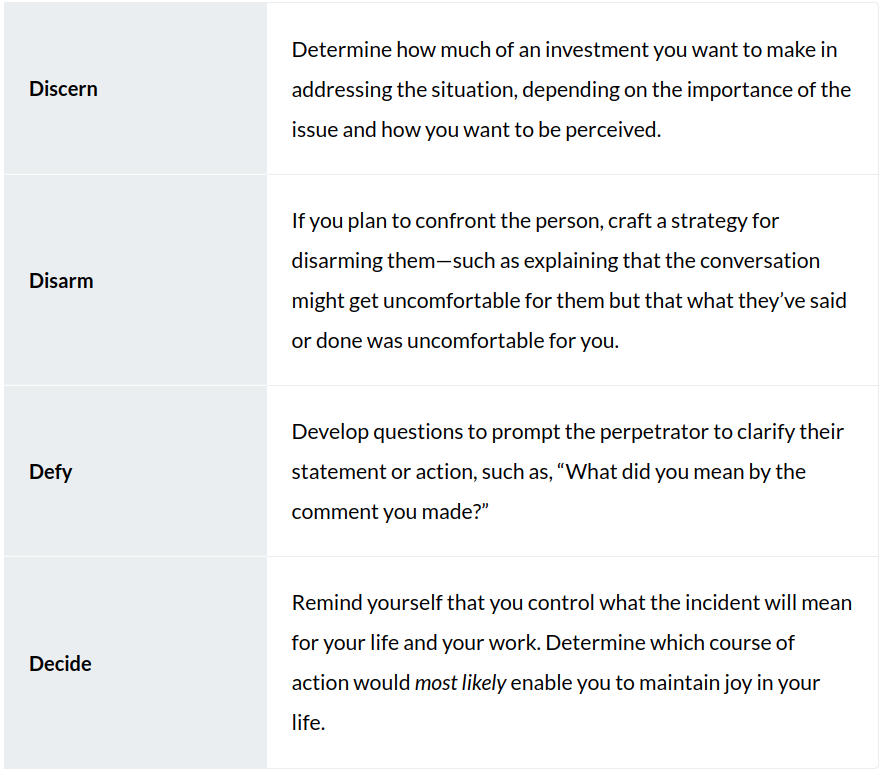
Standing up for yourself or others in the face of bias takes courage. If you decide to advocate for yourself or someone else, try these tips for doing so effectively: *
Get emotionally centered : Talk with confidantes or trusted counselors about the experiences you’re concerned about. You’ll honor the feelings triggered by those experiences, and you’ll channel your emotions into energy to fuel your next steps.
Know your goal : Decide what you really want to have happen: an apology from the other person? Repentance? An end to the bad behavior? The clearer your goals, the more likely you’ll see how to achieve them.
Speak up as a group : If possible, find like-minded colleagues and raise the issue together to those in positions to make changes. You’ll reduce the risk of being dismissed as “just one disgruntled person.”
State the facts : Describe the facts of what happened: “Yesterday, you said you’d never hire a woman again.” Avoid using judgmental language, such as: “What you said about my pregnancy was sexist and abusive.”
Defuse others’ reactions : Use inquiry to defuse any defensiveness that speaking up might trigger. For example, “The steps I’ve proposed seem appropriate, but maybe they feel problematic to you. Can you help me understand what you’re thinking?” Suggest what the facts mean to you, then invite the other person to a dialogue in which you both can learn.
Follow up : Acknowledge that talking about bias is difficult. You’ll make it more possible for you and the other person to move forward together with a shared understanding of what will change in the future.