Index
- Why inclusion matters
- Inclusion and psychological safety
- How to create psychological safety
- Encourage authenticity
- Demonstrate empathy and compassion
1. Why inclusion matters

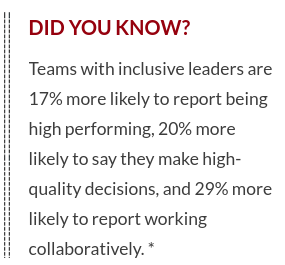
When people work with others who are different from them, they expand their own thinking and improve their performance. Equally important, they tend to make smarter decisions as a group and come up with more innovative ideas. All of this is good news for the entire organization.
But to realize these positive outcomes, it’s not enough to have a diverse team. You also have to know how to lead for inclusion. That means making sure people feel:
- They belong and their voices matter
- They are valued and respected
- They can fully participate in the team’s efforts
- They can bring their authentic selves to work
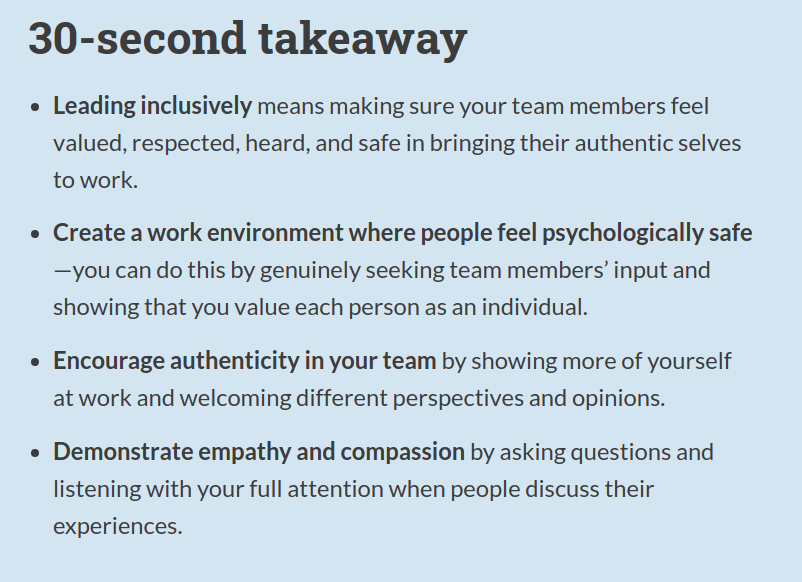
Leading for inclusion also means making an effort to learn about each team member as an individual. How can you become an inclusive leader? By regularly taking actions to:
- Create a sense of psychological safety
- Encourage authenticity
- Demonstrate empathy and compassion
2. Inclusion and psychological safety
Creating an environment in which people feel safe to be themselves at work is vital for fostering inclusion and a sense of belonging on your team.
- Engage in difficult conversations about differences
- Speak up if you see or hear microaggressions against yourself or others, even if perpetrators are higher up in the organization
- Make and learn from mistakes about diversity-related issues
- Contribute your ideas and perspectives without fear of being discounted, ignored, punished, or embarrassed
- Be candid and challenge the status quo
- Ask hard questions if you see something that worries you
Psychological safety is essential for empowering your diverse team to fulfill its highest potential. But there are plenty of obstacles that can prevent people from feeling psychologically safe, especially people from marginalized groups—such as women in organizations that employ mostly men, or people of color in organizations where most people are white.
3. How to create psychological safety
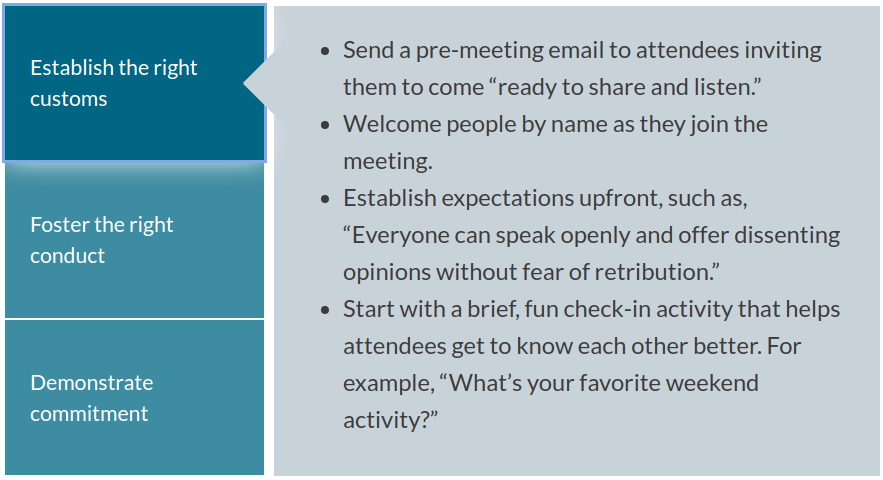
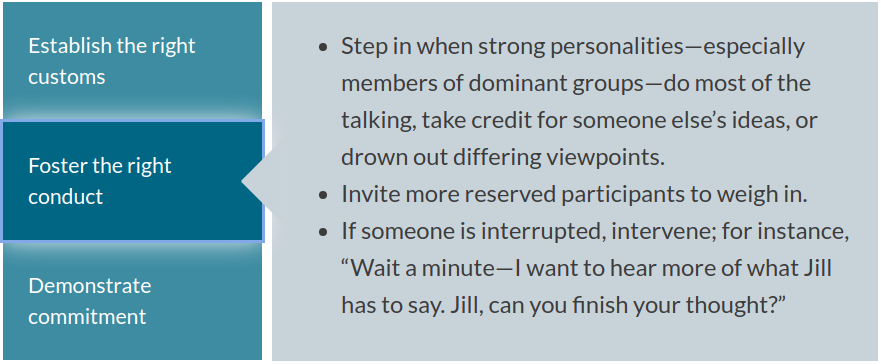
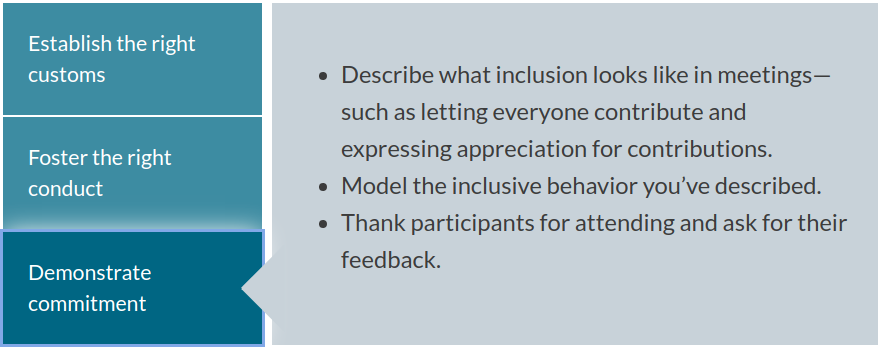
Consider meetings. Unless they feel safe, attendees won’t feel free to candidly offer their perspectives. This is especially true in virtual meetings, where it’s much harder to observe body language and other cues that indicate how participants are feeling.
If you’ve never had the experience of someone at work emphasizing your unique features, take a moment to imagine what it might feel like. How can you avoid making others feel singled out for their differences?
These tips can help: *
Genuinely seek their input. Ask people for their input because you truly value it, not because you want their opinion only as someone who represents a particular group
Ask open-ended questions. Ask open-ended (not yes-or-no) questions so you won’t make someone with different viewpoints, experiences, or preferences feel they’re at a disadvantage.
Value each team member as an individual. Understand that every person within a particular group has unique strengths, challenges, and experiences, and treat them as individuals.
4. Encourage authenticity

Managers who lead for inclusion don’t just foster a sense of psychological safety for their team. They also encourage authenticity by helping team members feel welcome to bring their whole selves to work.
Authenticity is a powerful performance booster. When people feel they can be themselves at work, everyone wins:
- Employees win because they’re more satisfied with their work and have less job stress.
- Their team wins because members collaborate and support each other more.
- The organization wins because teams are more productive and deliver better performance.
Despite these benefits, members of minority groups can find it difficult to express themselves fully at work. Why?
For some people, expressions of bias—like assumptions about who most deserves to be considered for a leadership position—can make them afraid to express their true selves.
Social interactions with colleagues can present additional authenticity challenges for minority group members. That’s especially true if people find it difficult to make small talk about their personal lives.
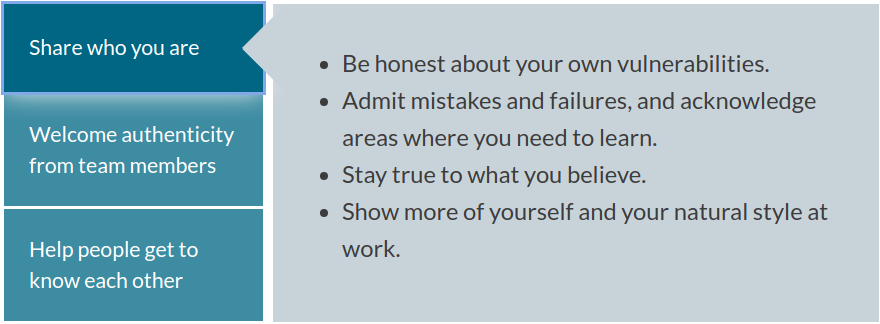
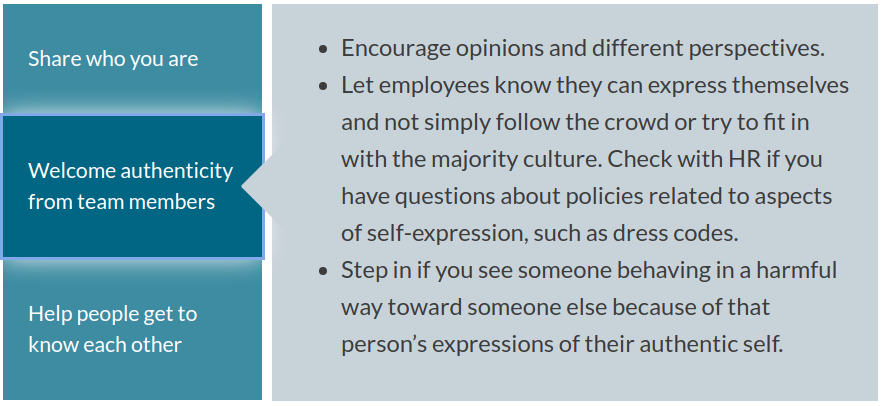
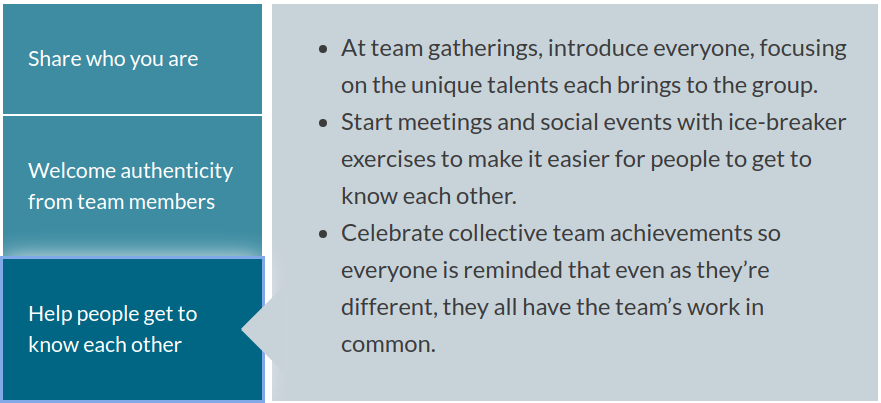
As a manager, to encourage authenticity in your team: *
5. Demonstrate empathy and compassion

Managers who lead inclusively demonstrate two other powerful characteristics:
- Empathy : The ability to understand what someone else is experiencing
- Compassion : Sympathetic concern for others’ suffering or misfortunes
When you empathize with and have compassion for people on your team—especially those who are members of minority or marginalized groups—you do a lot to make them feel included, heard, and valued.
For one thing, you let them know that you care about them and that you’re taking their unique views and experiences into account. That’s a lot better than just acting on preconceptions about their perspectives.
You also forge strong, personal connections among your team members. And those connections improve their ability to make decisions and collaborate together.
Empathy and compassion matter even more during times of crisis and disruption, when many people are experiencing feelings of fear, loss, and grief. The COVID-19 pandemic, for example, has led to huge increases in depression and anxiety, as many people have lost loved ones, have come down with the virus themselves, or have lost their jobs. Some people have endured all three of these hardships and more.
Some ideas for strengthening your empathy and compassion “muscles” include:
As you do the difficult work of building a truly inclusive team in which every person feels safe and supported, keep in mind that it’s okay to make mistakes. As a leader, you’ll succeed if you can acknowledge and learn from your miscues.
Learning how to lead for inclusion is an ongoing process, as you try new approaches, gain insights from missteps, and continually seek to improve.