Differences on your team can be immensely powerful. Learn how by sharpening your awareness of diversity, you can benefit yourself, your team, and your organization.
Index
- What is diversity?
- Why diversity matters?
- Individual and group identities
- Diversity and power differences
- The work to be done
- Where you can start
1. What is diversity?

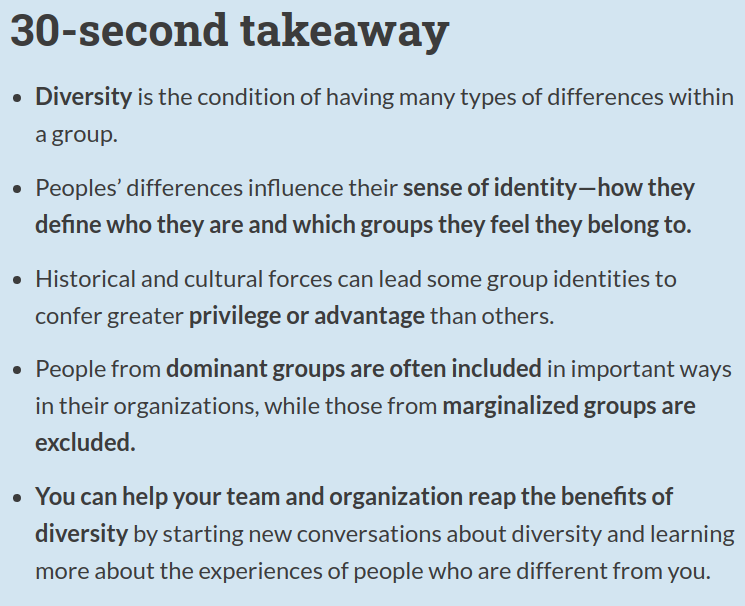
Diversity is anything that sets one individual apart from another, including the full spectrum of human demographic differences as well as the different ideas, backgrounds, and opinions people bring.
A range of differences within a group creates diversity. And diversity matters—for organizations’ and teams’ ability to deliver top performance, and for individuals’ ability to achieve their full potential.
2. Why diversity matters?

You may have heard that organizations with diverse workforces gain important business advantages.
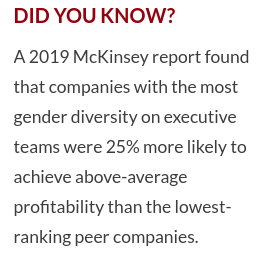
Beyond those advantages, organizations that support employees in embracing, talking about, and learning from differences also meet a moral imperative. Promoting diversity is simply the right thing to do. Why? It affirms the dignity of all people—thus honoring their humanity and enhancing their well-being. This applies not just to an organization’s employees, but also to customers, suppliers, and the communities in which an organization operates.
3. Individual and group identities

Diversity also matters because the things that make people different from each other contribute to their identities—how they define who they are and which groups they feel they belong to.
People make assumptions and draw conclusions about each other based on perceptions about one another’s identities. Those assumptions and conclusions can then influence how people behave around each other. The message? Identity groups do matter.
4. Diversity and power differences

In any organization, historical and cultural forces can set the stage for some identities to confer greater privilege or advantage than others. Examples of this phenomenon include systemic racism and sexism.
A person can belong to multiple dominant identity groups as well as to one or more marginalized groups.
People who hold multiple dominant identities tend to have better access to opportunities and resources. For others, exclusions from these benefits can come with a high price tag. For example, a person’s professional development can suffer if they’re a member of one or more marginalized groups.
Members of marginalized groups may also experience harmful treatment by others—intentional or not.
People experiencing marginalization can feel a lack of physical and psychological safety in their organizations. As a result, they may feel less engaged in their work and less able to perform their best on the job.
5. The work to be done

Despite several positive steps forward, much work remains to combat the destructive impacts of marginalization—and to unlock the real value and advantages that diversity has to offer.
Organizations and managers working within them can play a major role. For instance, it’s not enough to simply hire people from diverse groups. To reap the benefits from diversity, managers have to make these important changes:
- Improve how they leverage differences in their workforce
- Actively work against discrimination and marginalization
- Embrace people with a wide range of styles and voices
- Learn from differences
6. Where you can start
The key is to sharpen your awareness of what diversity is and why it matters, and then turn that awareness into productive action.
Take responsibility for your own learning and action instead of asking people from disadvantaged groups to do the hard work of making your organization more diverse, inclusive, and welcoming for everyone.
An important first step is to have more courageous and candid conversations about diversity.
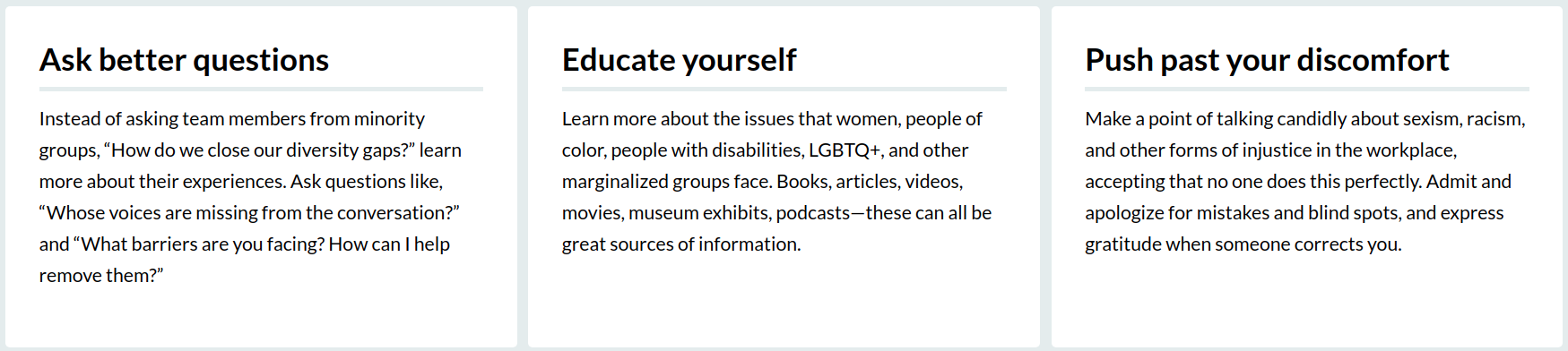
By taking responsibility for starting new kinds of conversations about diversity, you’ll gain the insights and skills needed to master these four key imperatives:
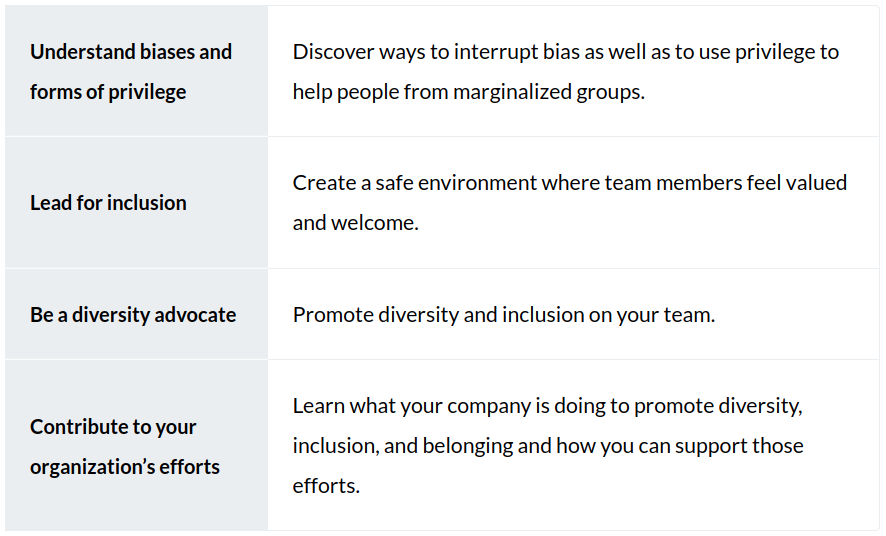
If this sounds like a lot of work, that’s because it is. But guess what: It just might turn out to be the most rewarding work you’ll ever do.